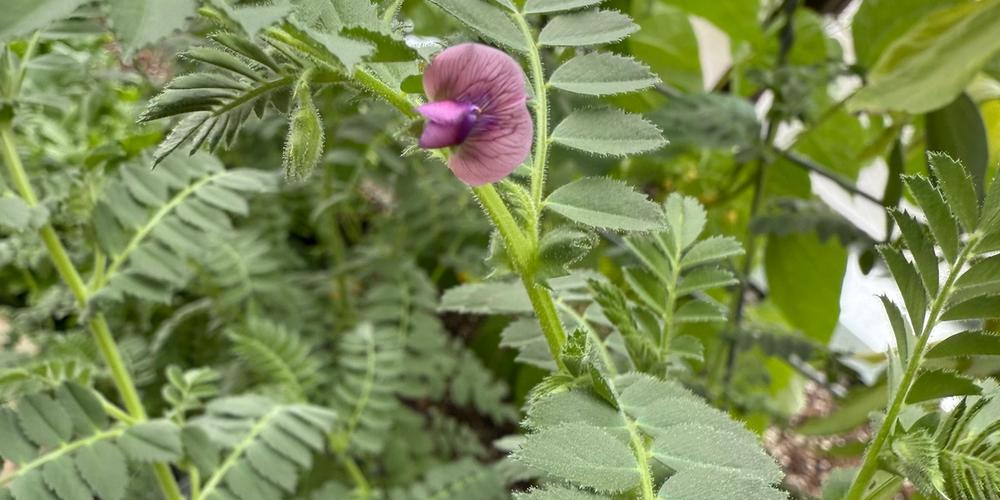
Chickpea Plant Care: From Seed to Harvest

- Family: Fabaceae
- Scientific Name: Cicer arietinum
- Common Name: Chickpea, garbanzo beans
- Type: Annual, vegetable
- Light: Full sun
- Soil pH: Slightly acidic to neutral
- Soil: Loamy, sandy, well-drained soil
- Zone: 3-9 USDA (Can be extended in a dome greenhouse)
Do you want to add color, texture, and height to your garden? Growing chickpeas is fun and easy plus you will be adding a wonderful legume as a staple for meal planning.
Chickpeas are a legume with a nutty flavor and grainy texture. While similar to other legumes such as lentils and beans, chickpeas have their own unique taste.
Best Location in a Greenhouse
Chickpeas need full, moderate sun, which is 6 to 8 hours of sunlight per day. However, they do not like the intense afternoon heat from the sun. Plant them where they receive the most sunlight in the morning and have some afternoon shade.

Planting Chickpeas
Many sources recommend planting 4-8 chickpea plants per person. If your goal is to make hummus you need quite a few plants as there are typically two beans per pod and about 50 pods per plant.

It is best to start chickpea seeds two to three weeks before the last frost of spring. However, chickpeas are prone to transplant shock. If it is necessary to start the seeds indoors, biodegradable pots are better to use as the plant roots will not be disturbed.
Plant chickpeas in rows. Each seed should be planted 2 inches deep with 3 to 5 inches between each hole. Space each row 12 inches apart.
Once seedlings reach 3 inches tall, thin them so they are 4 to 6 inches apart. It takes about 100 days to reach harvest time.
Plants will grow between 8 and 20 inches tall, and if planted closely, will offer support rather than using a trellis. Some gardeners choose to plant farther apart to avoid disease. In that case, a trellis or support system is recommended.
Caring for Chickpeas
Light: Chickpeas require 6-8 hours of moderate sunlight each day. In warmer climates with hot afternoon sun, chickpeas do best with afternoon shade.
Temperature: Chickpeas prefer warm—but not hot—growing conditions. They prefer mid-range daytime temperatures of 70-80 degrees and nighttime temperatures around 65-70 degrees.
Soil: A rich, well-draining soil in your beds will benefit chickpeas. They have a shallow root system, so do not plant other crops too closely. The best pH for chickpeas is 6.0; a pH level between 5.3 and 7 works well.
Water: Plan to water in the morning to help keep the soil evenly moist. Chickpeas need one inch of water per week. We recommend watering at the soil level with a hose, watering can, or drip irrigation. This helps avoid diseases such as fungal rot that can be caused by overhead watering.
Growing chickpeas in hot climates means they need more water during the heat of summer. Finger check the soil, it should feel moist two inches down in the soil.
Another factor to take into consideration is where you are growing your crop. If you are growing chickpeas in a greenhouse, the plants will need more water when it is producing seeds. This will ensure a strong crop.
Pollination: Chickpeas are self-pollinating plants!

Best Companion Plants
Chickpeas are a nitrogen-fixing plant and will grow well with most plants. So what does nitrogen-fixing mean? These types of plants have nodules on their roots that are filled with healthy bacteria. This replenishes the necessary nitrogen in the soil, a win-win!

Summer savory and cucumbers are good companions for chickpeas.
Plants to Avoid Planting with Chickpeas
Garlic and other alliums release a chemical that can inhibit growth in legumes. Plant them away from chickpeas! Plant alliums in a different raised bed or a different section in your garden.
Potatoes and soybean plants are susceptible to the same diseases as chickpeas, so should also be planted in a different location than chickpeas.
Managing Pests and Diseases
Chickpea plants are susceptible to fungus, and that susceptibility increases when leaves are wet. One important point to keep in mind is the handling of plants. If your plants are showing signs of fungus, handling each plant can spread the fungus. Wash your hands and sanitize tools immediately if you suspect one of your plants has a fungal disease, particularly if the leaves are wet.
Harvesting Chickpeas
Harvest chickpeas between 85-100 days after planting. Eat them fresh off the plant when the pods are still small and green. Eat them just like you would snap peas. Enjoy!

To dry them for storage and later use, allow the plant to turn brown and wither. Pull up the whole plant, including roots. Dry plants by laying them on their side on a flat surface. Store in a warm, dry, well-ventilated area until the pods crack open. Remove the seeds from the pods.
Store the seeds in airtight containers and keep them in a cool, dry location. To use dried chickpeas, rinse the seeds and soak them overnight before cooking them. 1 cup of dried chickpeas should yield approximately 3 cups once cooked.
Some sources suggest treating the seeds for potential insects and their eggs. There are two simple options: oven or freezer.
For the oven method, place the chickpeas on a baking sheet in a single layer. Heat the oven to 160° and pasteurize the chickpeas for 30 minutes.
For the freezer method, place the chickpeas in freezer bags and place them in a freezer at 0° for a minimum of 48 hours. Then store chickpeas in an airtight container in a cool, dry place.
The History of Chickpeas
Around 10,000 years ago, chickpeas were domesticated along with wheat, barley, peas, and lentils during the First Agricultural Revolution. Remnants of peas, fava beans, lentils, and chickpeas have been found in archaeological sites in Syria from the 8th millennium BCE.
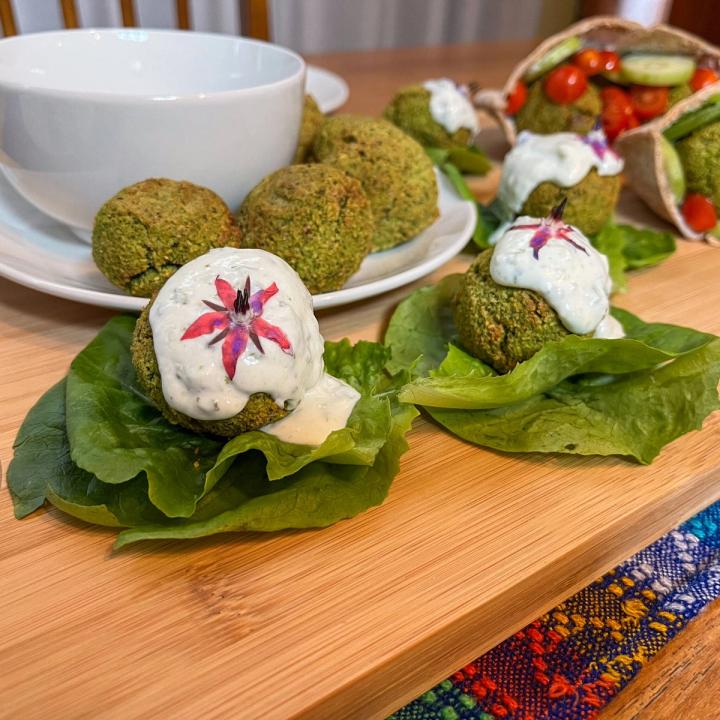
Chickpeas are thought to have originated in the Middle East in the countries now known as Turkey and Syria. They have been cultivated for over 7,000 years, especially in Mesopotamia and Egypt.
Trade as well as exploration spread chickpeas to other parts of the world. After being introduced to India around 300 B.C., chickpeas were soon a staple in Indian cuisine, particularly in hummus. In the Mediterranean region, chickpeas were soon used to make falafels.
The domestication and popularity of chickpeas continued to spread throughout the Middle East and by the Iron Age (c. 1200 – c. 550 BC) had spread to Ethiopia. The Spanish and Portuguese brought the chickpea to the Western Hemisphere (New World) in the 16th century.
The global market for chickpeas continues to grow. Many consumers worldwide have turned to this legume as the popularity of hummus and other chickpea recipes grows. Chickpeas are also important for those on gluten-free diets as they are used to produce gluten-free and grain-free flour.
Chickpea Trivia
- Did you know that chickpeas come in different colors? We are used to their usual beige color, but they come in a variety of colors including black, brown, green and red.
- Chickpeas are most commonly thought of in relation to the Middle East and delicious hummus. However, the country that produces the most chickpeas is India. Other countries growing chickpeas are Australia, Pakistan, Myanmar, Ethiopia, Turkey, Iran, Mexico, Canada, and Russia.
- Not only are chickpeas a wonderful crop, but they can also break the disease cycle in barley and wheat crops! Using chickpeas to help protect these crops means fewer chemicals, such as fungicides and pesticides.
- Did you know that chickpeas have been used as a caffeine-free coffee substitute since the 18th century? Decaffeinated coffee was invented in the early 1900s.
Health Benefits of Chickpeas

Adding chickpeas to your diet gives you a great nutritional boost. They are full of plant-based protein and fiber, plus they can be made into flour! Chickpea flour is gluten-free and has half of the carbohydrates found in wheat flour. They are a wonderful source of complex carbohydrates, folate, and potassium.
Not only do they help control blood sugar, but they are also important for heart health. Chickpeas are a good source of B vitamins, magnesium, iron, and selenium; all important for heart health. Controlling cholesterol levels is also necessary for heart health and chickpeas contain polyunsaturated fats that help control those levels.
Initially, chickpeas were used for their high nutritional content. As they became a dietary staple, they were also used for medicinal purposes.
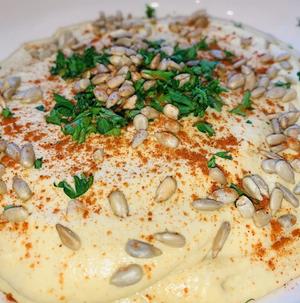
Nowadays, hummus is the most popular way Americans incorporate chickpeas into their diet. Have you grown chickpeas to make hummus? We have some delicious additional recipe ideas you could try to incorporate chickpeas into your diet, including a Pistachio and Chickpea Caesar Salad.
Happy gardening!

Seasonal Growing Tips & Greenhouse Advice
Monthly stories from our greenhouses, Growing Dome spotlights, and other gardening content


Share This
Featured Products


I joined Growing Spaces in 2021 as a gardener and now work with the Marketing and Social Media department. Formerly I was a kindergarten teacher and then worked as a Gardener and Volunteer Coordinator at Maui Nui Botanical Gardens in Hawai'i. Since moving to Colorado I have worked in the veterinary field and have been involved in therapy dog work visiting hospitals, schools and libraries with a national therapy group. My previous dog and I also worked as a crisis response team helping those affected by crises or disasters and were deployed through Hope Animal-Assisted Crisis Response (Hope AACR). Muppet and Maple are my current therapy dogs and we visit the library and hospital here in Pagosa Springs. Muppet is also a crisis response canine with Hope AACR. Outside of working and volunteering, I love growing native plants, flowers, berries, herbs and veggies at home, photography, hiking, horseback with my husband and hanging out with our dogs.
View full bioDownloads
Featured Categories
Seasonal Growing Tips & Greenhouse Advice
Monthly stories from our greenhouses, Growing Dome spotlights, and other gardening content
Featured Stories

How to Grow Food Year-Round Without Spending a Fortune on Greenhouse Heating

Growing a Pawpaw Tree Way Down Yonder in a Greenhouse

2026 Calendar of Events

Fig & Crunchy Chickpea Salad with a Refreshing Mojito Mocktail

Growing Dome Photo Contest 2026

Top 10 Activities, Attractions, and Dining in Pagosa Springs

Growing Through Deep Winter: A Comparison of Greenhouse Approaches

Preserving the Harvest: Pickling and Fermentation
Sign up for The Happy Grower Newsletter
Once a month: stories from our gardens, Growing Dome spotlights, and what's in season in Pagosa Springs.