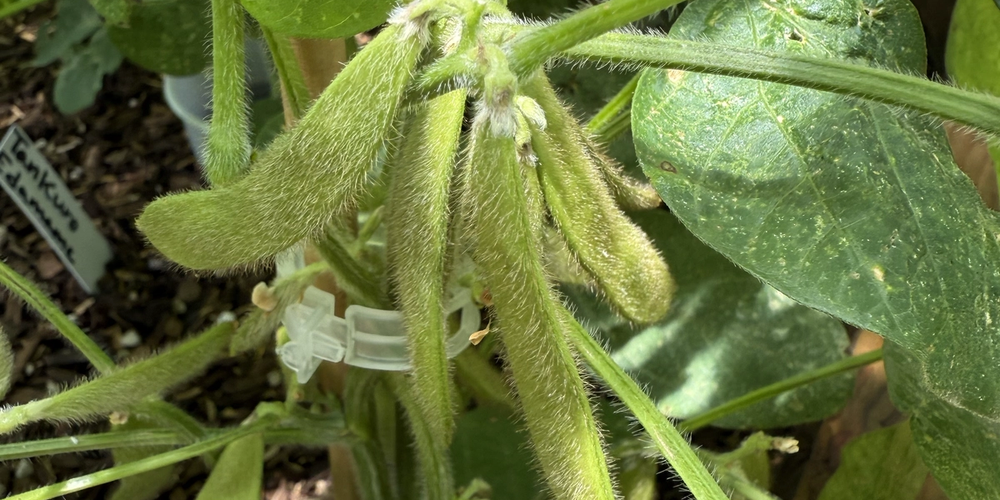
Growing Edamame in Your Greenhouse or Garden

- Family: Fabaceae
- Scientific Name: Glycine max
- Common Name: Edamame, soybean, soya bean
- Type: Annual, vegetable
- Light: Full sun
- Soil pH: Slightly acidic to neutral with a pH range of 6-6.8
- Soil: Well-drained soil
- Zone: 3-9 USDA (Can be extended in a dome greenhouse)
Growing Edamame
If you’re looking for a nutritious, easy-to-grow crop that delivers both flavor and function, edamame is a fantastic choice. These young soybeans are not only packed with protein and essential nutrients, but they’re also surprisingly simple to grow in a garden or greenhouse setting.
Whether you’re new to gardening or expanding your vegetable lineup, here’s everything you need to know to successfully grow edamame. Visit our Greenhouse Gardening Tips page for more information.
Planting Edamame
- Wait until the risk of frost has passed
- Sow seeds ¼ to ½ inch deep
- Space seeds 2–4 inches apart
- Keep rows about 2 feet apart
- Thin seedlings to 6 inches apart after they sprout
For a steady harvest, consider planting new seeds every 10 days.
Best Location to Plant Edamame
These plants require at least 6 hours of sunlight per day. This bush-type bean typically reaches 2-3 feet tall, although they can grow up to 5 feet tall, and does not require staking, unless they become leggy.
At the Growing Spaces campus, we planted our last crop in the southeast section of the center bed. Be sure not to plant edamame in the shade of taller crops or trees.

Caring for Edamame
Edamame thrives in warm, sunny environments, making timing and placement key. If you’re using a greenhouse, you can get an early start on the growing season.
Light: Full sun, 6 to 8 hours is ideal.
Temperature: Soil should be at least 55°F; air temperatures above 60°F. As a warm-season crop, check your soil temperature before planting. Soil that is cold and wet may rot the seeds.
Soil: Well-drained with a pH between 6.0 and 6.8. We recommend testing your soil every spring.
Space: Plants can grow up to 5 feet tall, so allow room to expand.
Water: Edamame are not drought-tolerant and require consistent moisture. Start with one inch of water per week, increasing as plants flower and set pods. Reduce watering as pods mature and leaves begin to yellow.
We recommend watering at the base of the plants as this helps to avoid fungal diseases, as it keeps the foliage dry.
Pollination: Soybeans are self-pollinating; however, a 2023 study at the University of Maryland revealed that the yield increases when multiple plants are planted, and pollinators are free to visit the plants.

Best Companion Plants For Edamame
Edamame does well with companion plants like celery, corn, squash and strawberries. Marigolds are another great addition because they attract beneficial insects as well as deter whiteflies and other pests.

Companion Plants to Avoid
Avoid planting edamame in the same bed where other legumes like beans and peas have grown. Rotate crops in these families with other plants.
Managing Pests and Diseases
Like any garden crop, edamame can attract pests such as bean beetles, stink bugs, and whiteflies. Keeping plants healthy and monitoring regularly can go a long way.
Good practices include:
- Encouraging beneficial insects
- Removing affected plants when necessary
- Ensuring proper spacing for airflow

Diseases like powdery mildew and white mold can occur, but they’re often preventable with proper watering and ventilation.
Harvesting Edamame
Edamame are soybeans that are harvested early. Harvest by picking the green, immature pods when they are two to three inches long. They should be plump and bright green.
Looking for ways to use fresh edamame? A great way to enjoy your harvest is in our protein-packed edamame guacamole, a fresh twist on a classic dip that makes this versatile crop even more fun to grow.

If you want dried soybeans, the pods should remain on the plant for two to three months. It takes approximately 100 growing days before harvesting. The leaves will turn yellow and the pods will dry and turn brown.
Remove the whole plant, then hang upside down to dry. Choose a well-ventilated area. After the plant has dried, remove the pods and shell the soybeans.

The History of Edamame
The first recorded cultivation of soybeans was about 7000 years ago in China. The earliest mention of “edamame” is from the year 1275 when Nichiren, a Japanese monk, wrote to a parishioner thanking them for the “edamame” gift that was left at the temple.
Edamame was first mentioned in March 1923 in C.V. Piper and Joseph W. Morse’s book "The Soybean”. The book features edamame being eaten out of shelled pods along with nutritional facts and recipes of this “new” vegetable. Soybeans and edamame were not recognized in the United States until 1955.
It wasn’t until 1999 that frozen edamame beans became available for sale in supermarkets and specialty shops in New York and New Jersey. In 2008, edamame began to be sold in European grocery stores as an alternative source of protein.

Edamame Trivia
- Did you know that the name Glycine max is derived from the Latin word glykys? It means sweet!
- In China the name for edamame is maodou, which means “furry beans”. Edamame pods are soft and fuzzy on the outside.
- Edamame is the only vegetable that has all nine essential amino acids and is a complete protein source.
- Did you know that Civil War soldiers used dried soybeans in place of coffee?
Health Benefits of Edamame
Edamame is a delicious snack that is low in calories, high in fiber and nutrients. It is a good source of vitamin K, folate, magnesium, iron, copper and more. Edamame and soybeans are different from other plant proteins in that they are a whole protein source as well as providing all the essential amino acids we need.
Studies show that eating edamame or soybeans may help reduce cholesterol, support heart health and help with blood sugar regulation. They also contain antioxidant and anti-inflammatory properties.

An especially important point is for older women experiencing menopause. Registered Dietician Julia Zumpano, RD, LD says “Research shows the phytoestrogens found in soy, edamame, and tofu can naturally help your body’s own production of estrogen. This may help reduce menopause symptoms.”
Growing edamame in a dome greenhouse or garden is good for your garden as well as being good for you. Whether you opt to harvest early as edamame or allow the plant to grow to full maturity as soybeans it is a wonderful crop to grow. Happy gardening!

Seasonal Growing Tips & Greenhouse Advice
Monthly stories from our greenhouses, Growing Dome spotlights, and other gardening content


Share This

I joined Growing Spaces in 2021 as a gardener and now work with the Marketing and Social Media department. Formerly I was a kindergarten teacher and then worked as a Gardener and Volunteer Coordinator at Maui Nui Botanical Gardens in Hawai'i. Since moving to Colorado I have worked in the veterinary field and have been involved in therapy dog work visiting hospitals, schools and libraries with a national therapy group. My previous dog and I also worked as a crisis response team helping those affected by crises or disasters and were deployed through Hope Animal-Assisted Crisis Response (Hope AACR). Muppet and Maple are my current therapy dogs and we visit the library and hospital here in Pagosa Springs. Muppet is also a crisis response canine with Hope AACR. Outside of working and volunteering, I love growing native plants, flowers, berries, herbs and veggies at home, photography, hiking, horseback with my husband and hanging out with our dogs.
View full bioDownloads
Featured Categories
Seasonal Growing Tips & Greenhouse Advice
Monthly stories from our greenhouses, Growing Dome spotlights, and other gardening content
Featured Stories

How to Grow Food Year-Round Without Spending a Fortune on Greenhouse Heating

Growing a Pawpaw Tree Way Down Yonder in a Greenhouse

2026 Calendar of Events

Fig & Crunchy Chickpea Salad with a Refreshing Mojito Mocktail

Growing Dome Photo Contest 2026

Top 10 Activities, Attractions, and Dining in Pagosa Springs

Growing Through Deep Winter: A Comparison of Greenhouse Approaches

Preserving the Harvest: Pickling and Fermentation
Featured Products


Sign up for The Happy Grower Newsletter
Once a month: stories from our gardens, Growing Dome spotlights, and what's in season in Pagosa Springs.