“There is No Downside to a Dome” - A Louisiana Greenhouse

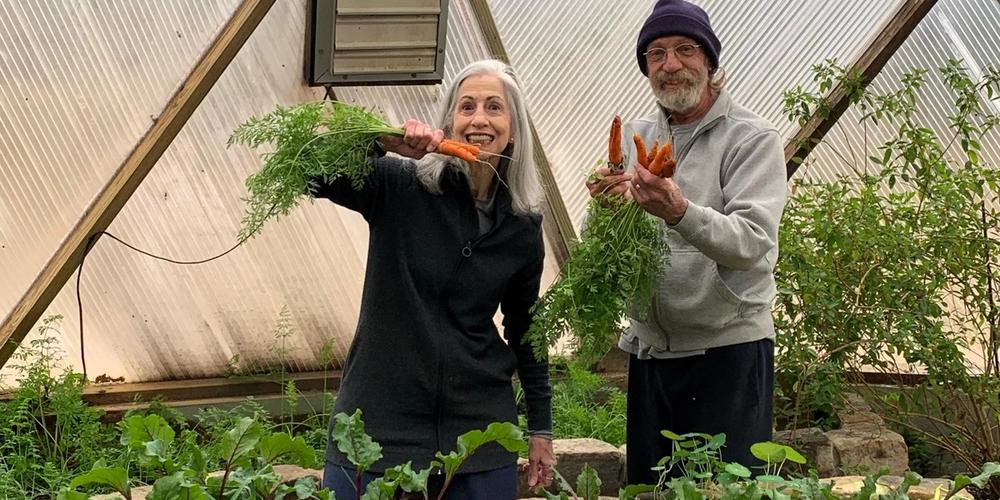
Richard and Scotti Rodgers have created a community haven on their 20-acre property in Natchitoches (pronounced Nakotish), Louisiana with their 33’ dome, massage therapy studio and outdoor garden.

One of the town’s claims to fame is that it is the oldest town in the Louisiana Purchase. It was also the home of Robert Harling, who wrote the play Steel Magnolias and was the location for filming the movie in 1988. The Rodgers’ personally knew the author, Robert Harling, his Mom and the characters in the play. Plus, our marketing Manager, Shelby, was named after the main character.
They had a dream of turning their property into a place they could live, work, play and share with others. So adding their 33’ dome greenhouse to their property in 2009 was perfect. The dome is located near Scotti’s massage therapy and yoga studio as well as their outdoor garden. Now, after yoga classes, students visit the dome or garden to take home fresh produce. They also mentor young adults who want to learn about gardening.

Initially Scotti wanted a smaller dome greenhouse, but Richard kept advocating for a larger dome and told her that you can’t go bigger once you’ve built your dome. He finally stopped at the 33’ dome so he didn’t “blow the deal”. Choosing the size you want and have room for is ideal. Scotti says Richard can justify anything and they love their dome! Richard says there is no downside to having a dome. Everything about it is good and positive and fun.
Finding Opportunities
When they purchased their dome in 2009, gas prices were $5 per gallon and that meant the shipping was going to be very costly. Scotti is a massage therapist and she put on her thinking cap and had a great idea. She searched and found a continuing education opportunity in Crestone, CO.
Richard reached out to Growing Spaces to find out if he could volunteer on a dome installation nearby. There just so happened to be one so Richard experienced building a dome with the Growing Spaces crew while Scotti took a Continuing Education course on hot stone massage therapy.
They picked up their Growing Dome from our Pagosa Springs manufacturing facility. Then hauled their trailer loaded with their dome through the mountains. The most challenging part of the trip was driving through Dallas!
Richard prepared the site and leveled the ground. When they built their dome, 2-3 friends came and helped and the dome was done in three days. Building the interior took a bit longer though. Richard built their beautiful raised stone beds in the design of a Native American Medicine Wheel.

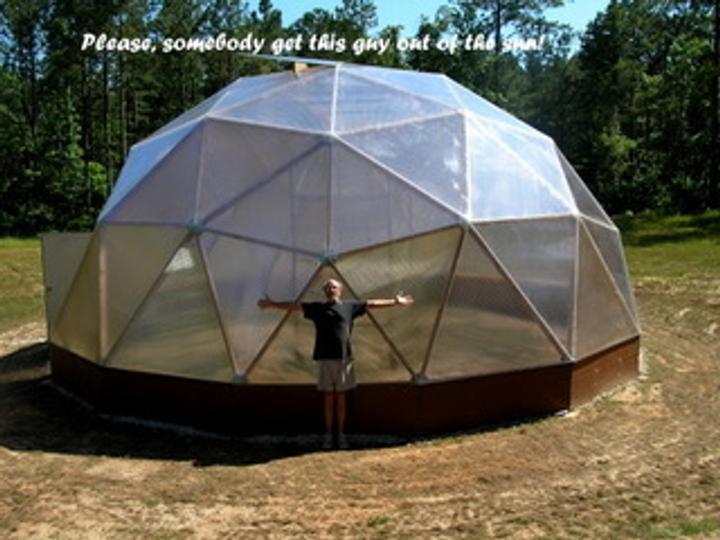
This summer they will be replacing the struts and glazing along with the help of friends and their contractor. After 17 years and a hurricane later, it’s time for a bit of TLC. They had their contractor out to talk about some projects they wanted done, but then he spotted the dome and had to have a look. He thought it was the “coolest thing ever” and was blown away. When they told him it needed to have the glazing re-done and some other work done, he asked if he could be part of the project. They plan to work on it this summer once his schedule opens up, just in time to start planting for fall and winter!
A Unique Growing Environment
While many of our dome greenhouse owners are in locations that have short growing seasons, we do have many domes in the southern states. Hail, hurricanes and harsh climates affect gardeners in the south and the Growing Dome has been a solution for them.
Richard and Scotti’s dome can hit 130 degrees F in the heat and humidity of summer. Before you click away, remember that we are talking about a greenhouse and this makes sense when you consider the average high is 94 degrees F. The beautiful stone beds that Richard built do have a higher thermal mass than wood or other materials so that is something to consider when designing your greenhouse beds.

They did experiment with heat-loving Malabar spinach for a summer crop, but it was very invasive and took awhile for them to remove it from the dome.
Many of their plants love the humidity so other than fans, they leave their dome alone in summer. For this reason the main use of their dome is a fall through winter and a bit into spring.
Coordinating the Dome Garden and the Outdoor Garden
In late winter/early spring Richard starts all the seeds for his outdoor garden. His typical starts are tomatoes, peppers, eggplant, broccoli, cabbage, cauliflower and zinnias. This gives him a jumpstart on planting his outdoor garden in March. By the time the air temperature and soil temperature are ready for planting, his “starts” are 8-10 inches tall. Richard says that without the dome they wouldn’t be able to grow their plants from seed.

Their outdoor garden will grow from March until July when it gets too hot. The exceptions are bell peppers, eggplants and okra that all love the hot days of summer.
However, summer time is when their dome gets a break. They revitalize the soil and clean up in preparation for fall. Some of their plants love the humidity and heat and thrive in summer. These include a neem tree (edible Indian Spice) that Richard uses for his Indian cuisine, basil and water hyacinths. The water hyacinths are grown in the large water tank for compost. It multiplies fast and also composts fast.
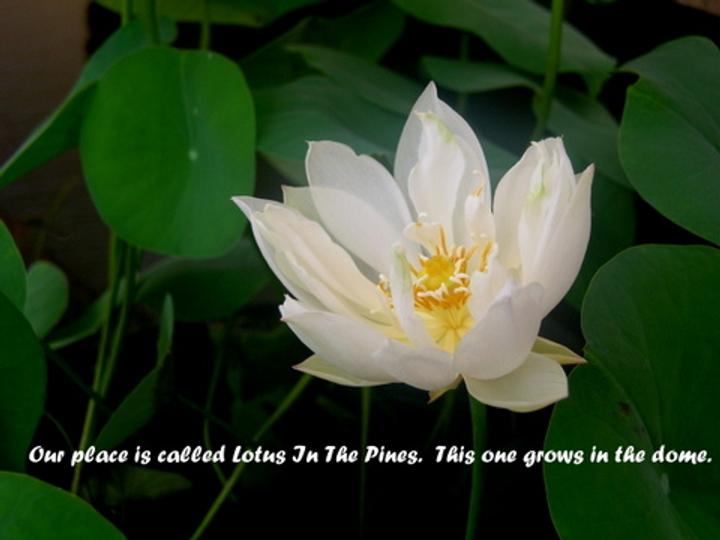
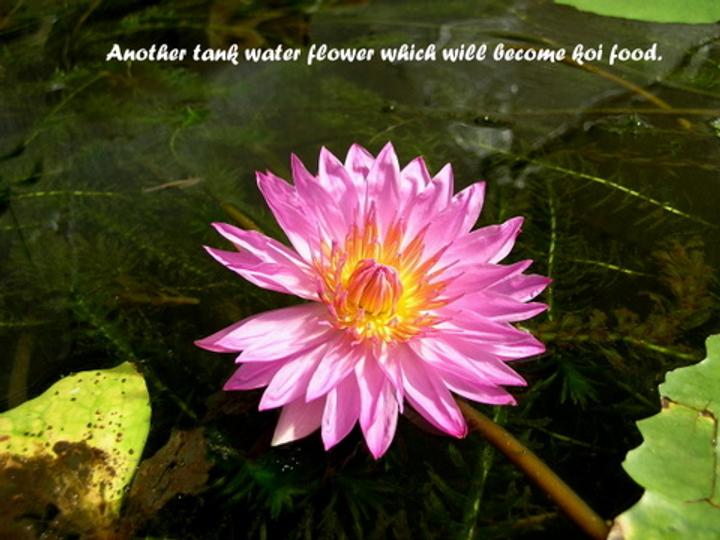
They also have a lot of gold fish in the tank and children love to feed them when they visit. The cat is interested also…

In fall and winter the dome is used to grow cool weather crops and overwinter many of their potted palms, ferns, philodendrons, a marmalade-colored Crossandra and other plants that don’t do well outside in winter. Two Norfolk pines are also wintered over in the dome. They started out as small 6 inch tall decorations for one Christmas years ago and now are 6 feet tall.

Their gardening zone has changed over the years and they are now in zone 8. They grow cabbage, kale, collards and garlic in their outdoor garden in fall and winter. Inside the dome their winter crops are garlic, arugula, beets, Swiss chard, carrots, kale, collards, cilantro, a variety of lettuces, and spinach.
The Joy of the Dome
Scotti says that it’s just fun. On the rare occasion they have snow on the ground walking into the dome and seeing all the plants is nice. Winter in Louisiana is drab, dull and gray and not very picturesque. Then you walk into the dome and it is green, warm and humid and it feels like you are walking into the spring. They have a big hibiscus that is like a tree and to see it in full bloom in winter is beautiful. Scotti says that although the dome is for food it is also very nourishing for your soul and spirit. It gives back on so many levels.

The return that you get from a dome is not always going to be in dollars, but in decades of peace of mind. Knowing where your food comes from and maximizing the nutrient value along with the emotional boost from having your hands in the soil and your heart in your garden.
Building a Community-Minded Property
Scotti is a massage therapist with her studio on their property. Both Scotti and Richard also teach yoga on their property. Many clients and friends have expressed interest in the dome, their garden and fresh produce.

Richard always keeps a row or two open in the garden for those who want to give gardening a try. This reminded me of my neighbors introducing me to gardening at a very young age. They taught me to plant seeds when I was about 5 years old. The love of gardening is a beautiful gift to share with a young person.
Gardening and Experimentation
Before building the dome, Scotti would make grocery lists to plan meals. Now she loves going out to the dome or garden and deciding what to make by what is ready to harvest. The taste of fresh produce versus produce that has been trucked for days always amazes Scotti who has been cooking for a long time and used to make elaborate meals. Now she’s enjoying how what is growing in the dome has simplified her meal planning and cooking.
Most of their meals are plant-based and with the option to buy organic food an hour away, the dome and garden contain many of the ingredients for their daily meals. They also use ideas from Forks Over Knives and other plant-based meal planning websites.
It is so rewarding to know you have control over the foods we put in our bodies. Richard said “To be able to grow nutritious, tasty, healthy, fresh food is just the most rewarding thing in the world. The dome really has made that possible.”

Surprises in the Dome
Sometimes nature finds ways into our greenhouses. Most of the time it just means you are having to balance your ecosystem with beneficial insects and companion plants helping to deal with pests. It’s not always easy as pests enjoy greenhouses also, but they are typically not life threatening.
Richard and Scotti have experienced something a little more menacing than your average greenhouse pests. On June 13, 2025, Richard was working on some projects in and around the dome. He entered the dome and found a very large rattlesnake curled up on one of the old style undersoil fans. She was as big around as his upper arm!

On the plus side, the snake was highly visible rather than hiding under a plant. On the minus side, she showed no inclination to vacate the dome despite Richard’s attempts to encourage her to leave. He prefers to coexist with nature, but this is not something you can just leave in your greenhouse. Richard did have to terminate her, but apologized to her first. She had picked the wrong place to settle and it turned out she was pregnant with around 30 babies. That would have been a dangerous nightmare to deal with! Most everything is welcome, except for rattlesnakes.
They have had birds and a possum visit before. Once a giant rabbit found its way in the dome, but couldn’t figure out the maze inside. After Richard gave a good chase around the medicine wheel beds the rabbit finally found the open door and left.
There are also good visitors, such as frogs!

Surviving Hurricane Rita and Hurricane Laura
Their location was previously considered to be Zone 7, but is now Zone 8. They can have violent hail storms with golf ball sized hail along with high summer heat and humidity.
Typically where they live, 200 miles inland, hurricanes just bring rain to their area. In the hot dry summer, a hurricane can break that cycle and bring some refreshing rain. Most of the time they have not experienced the full force of hurricanes. Hurricane Katrina in August 2005 missed them. Hurricane Rita in September 2005 went right over them and they were without power for 10 days.
However, when Hurricane Laura hit in 2020, they were awake all night watching it come in. Having many 100 foot tall pines and gigantic oak trees with shallow roots around their home, they realized they had to bail out. They grabbed one of their cats and spent most of the evening in their car in a neighboring field with no trees. Their other cat refused to come out from under the house, but did survive!
When the eye of the storm was right over their property, Richard drove back to the property and found that the structures were all safe. They did lose 20 big oak trees, but luckily those fell into the woods and away from the structures. Their dome had no damage at all.

Going Forward
Richard says there is no downside to a dome. He was fortunate to hear Buckminster Fuller speak years ago at the college in town and was impressed with the structure and how even a hurricane can flow right over it. Having now experienced owning a dome and a hurricane with a dome, he’s even more impressed!
Happy gardening!

Seasonal Growing Tips & Greenhouse Advice
Monthly stories from our greenhouses, Growing Dome spotlights, and other gardening content


Share This

I joined Growing Spaces in 2021 as a gardener and now work with the Marketing and Social Media department. Formerly I was a kindergarten teacher and then worked as a Gardener and Volunteer Coordinator at Maui Nui Botanical Gardens in Hawai'i. Since moving to Colorado I have worked in the veterinary field and have been involved in therapy dog work visiting hospitals, schools and libraries with a national therapy group. My previous dog and I also worked as a crisis response team helping those affected by crises or disasters and were deployed through Hope Animal-Assisted Crisis Response (Hope AACR). Muppet and Maple are my current therapy dogs and we visit the library and hospital here in Pagosa Springs. Muppet is also a crisis response canine with Hope AACR. Outside of working and volunteering, I love growing native plants, flowers, berries, herbs and veggies at home, photography, hiking, horseback with my husband and hanging out with our dogs.
View full bioDownloads
Featured Categories
Seasonal Growing Tips & Greenhouse Advice
Monthly stories from our greenhouses, Growing Dome spotlights, and other gardening content
Featured Stories

How to Grow Food Year-Round Without Spending a Fortune on Greenhouse Heating

Growing a Pawpaw Tree Way Down Yonder in a Greenhouse

2026 Calendar of Events

Fig & Crunchy Chickpea Salad with a Refreshing Mojito Mocktail

Growing Dome Photo Contest 2026

Top 10 Activities, Attractions, and Dining in Pagosa Springs

Growing Through Deep Winter: A Comparison of Greenhouse Approaches

Preserving the Harvest: Pickling and Fermentation
Featured Products


Sign up for The Happy Grower Newsletter
Once a month: stories from our gardens, Growing Dome spotlights, and what's in season in Pagosa Springs.