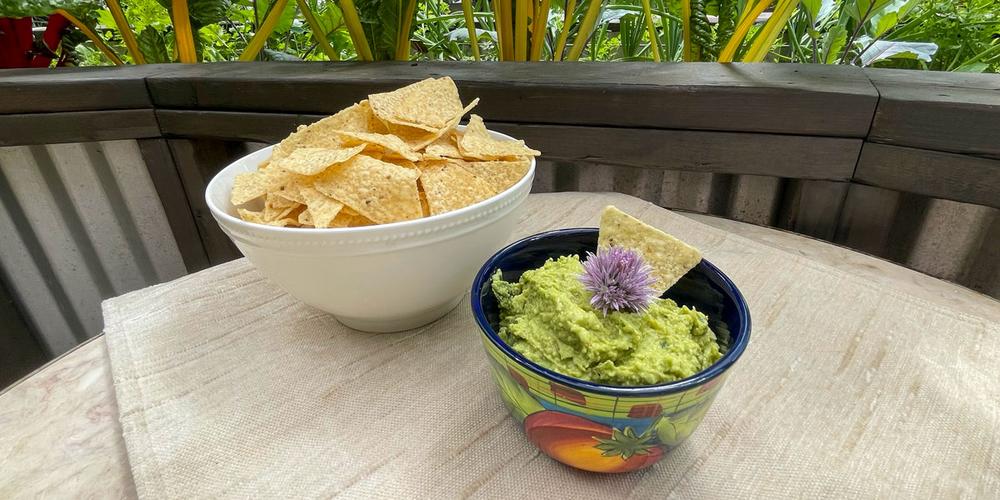
Protein-Packed Edamame Guacamole


Dave, the avocado tree growing in the background
If you’re looking for more ways to add plant-based protein to your diet, edamame is a great place to start. Protein supports weight loss, helps build or maintain muscle, and offers a satisfying alternative to animal-based foods. An easy way to make edamame feel a little more fun and approachable is by blending it into guacamole.
Edamame plants are especially well-suited for growing in a Growing Dome. They love heat and are a great choice if you’re interested in growing edamame in a greenhouse. They usually don’t require staking unless they’re exposed to high winds or heavy rain. Not typically a concern in the greenhouse, though leggier plants may still appreciate a little support.
Edamame and soybeans are the same plant. The difference is simply the stage at which they’re harvested. Edamame is picked young, about three months after planting, while the pods are still green and tender. They’re often lightly steamed in the pod, but eaten shelled. If left on the plant, the pods and plants will fully mature about 3–4 weeks later, when the leaves begin to yellow or brown and drop.
How to Store Soybeans and Edamame
To preserve your harvest, soybeans can either be left on the plant to dry or frozen at the early edamame stage.

12 oz of edamame pods yield approximately 1 cup of shelled edamame.
If you allow them to mature and dry fully, they can be used like other dried beans or cooked and roasted for a crunchy snack. They can even be used to make homemade tofu or soy milk. Mature soybeans are higher in protein and lower in starch than many other beans, so they typically need a longer soak and cook time than something like pinto or black beans.
To freeze edamame, harvest the pods when they are 2 to 3 inches long, plump, and green. Blanch them in salted water for 2 to 3 minutes, then plunge them into an ice bath to stop the cooking process. Dry thoroughly.
For easier long-term storage, spread the pods on a sheet pan and place them in the freezer for 1 to 2 hours before transferring them to a large zip-top bag. They can be frozen in the pod or shelled. Stored this way, they will last in the freezer for up to a year.
When you’re ready to eat them, boil for another 3 to 5 minutes, or add them directly to soup or stew to finish cooking there.
Another popular way to use edamame is to blend it into guacamole. Avocados don’t contain much protein on their own, but they do offer fiber and healthy monounsaturated fats, making them a great match for protein-rich edamame.
Edamame Guacamole Ingredients
- 1 cup cooked, shelled edamame
- 1 to 2 medium or large avocados
- 1 jalapeño, seeded and chopped
- 1/4 small onion, chopped
- Juice of 1 to 2 limes or lemons, about 2 to 3 tablespoons
- Salt and pepper to taste
- A dash or two of hot sauce
- 1/4 teaspoon coriander
- 1/8 teaspoon paprika, chili powder, or red pepper flakes


How to Prepare Edamame Guacamole
- Chop the jalapeño and onion and set aside.
- In a food processor or blender, combine the avocados, edamame, lime juice, hot sauce, and spices. Blend until mostly smooth.
- Fold in the jalapeño and onion, then serve and enjoy.
Pro Tips

If your onions seem a little strong, place them in a bowl of water while you prepare the rest of the ingredients. The soak will take out some of the “Ay, ay, ay!”
Taste your jalapeño before adding it. They can vary a lot in heat, so this helps you decide whether to use the whole pepper.
Also, taste test at the end and adjust the seasoning as you like. It’s easier to start with a smaller amount and add more than it is to take it away.
Depending on the texture you like, you can roughly chop or finely dice the jalapeño and onion. I finely diced mine in the food processor, then set them aside before blending the rest of the ingredients.
If the texture feels too grainy from the edamame, next time, try blending the edamame and citrus juice first before adding the avocados and spices. If you’ve already added the avocados, you can also add a little water, about 1/2 teaspoon at a time, and blend again until it reaches your preferred consistency. A little graininess is not a bad thing.
Dome-Grown Ingredients
All of the ingredients in this recipe can be grown in a dome, and we’ve done it.

avocado

soybeans (edamame)

jalapeno

onions

lemon

cilantro (coriander)
Other Add-Ins and Substitutions
Feel free to add your favorite guacamole extras, like chopped tomatoes, cilantro, cumin, or minced garlic. You can also adjust the spices based on your taste or what you have on hand. I like a pickled pepper.
For toppings, try toasted pepitas. Or go a little wild and add mango or pineapple.
You could also substitute fava beans for the edamame. Both have an extra skin after shelling that you may want to remove for a smoother texture.
Serving Suggestions for Edamame Guacamole
This satisfying guacamole can be served on its own as an appetizer or alongside a meal, like vegan quinoa tacos or tamales. It would also be a fun addition to your next Cinco de Mayo celebration.


Seasonal Growing Tips & Greenhouse Advice
Monthly stories from our greenhouses, Growing Dome spotlights, and other gardening content


Share This
Featured Products


Having lived in Pagosa since 2001, I’m very familiar with Growing Spaces and have been interested in their geodesic dome design since we moved here. I got my start in gardening in the challenging conditions that Pagosa has to offer. In a previous role with the Southwest Land Alliance, I was able to contribute my graphic design services to the Geothermal Greenhouse Project, which features these unique domes. When I’m not working, I’m camping and exploring with my husband and dog, or I may be found tinkering with new creative projects like knitting or picking the mandolin. I’ve worn a lot of hats over the years and am excited now, in the spring of 2024, to be joining the marketing team and supporting the Growing Spaces community.
View full bioDownloads
Featured Categories
Seasonal Growing Tips & Greenhouse Advice
Monthly stories from our greenhouses, Growing Dome spotlights, and other gardening content


Sign up for The Happy Grower Newsletter
Once a month: stories from our gardens, Growing Dome spotlights, and what's in season in Pagosa Springs.