Growing Borage in a Greenhouse: Companion Planting & Bee-Friendly Benefits

In this guide, you’ll learn why borage is one of our favorite greenhouse companion plants, which crops grow well with borage, what not to plant nearby, how it supports pollinators, and where it fits inside a Growing Dome garden.

Why Grow Borage?
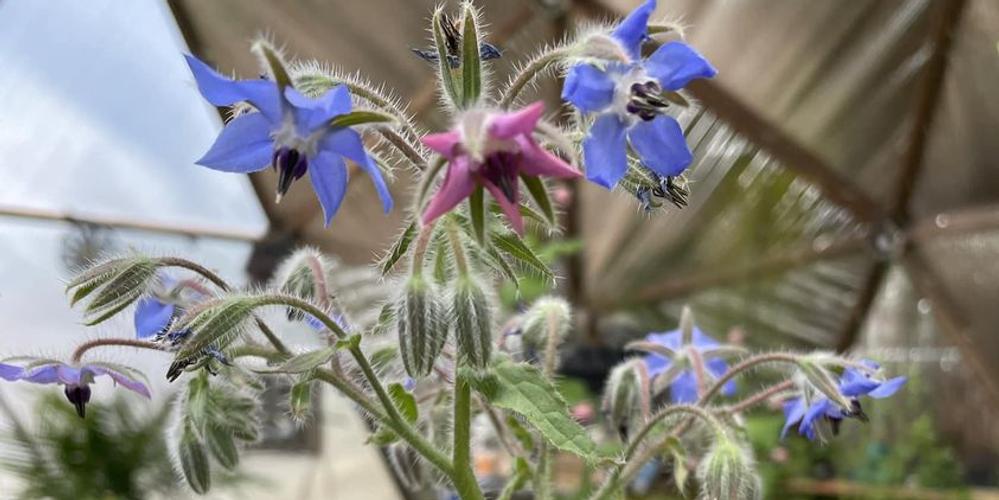
Borage, an annual herb loved by bees, serves as an excellent pollinator attractor for your greenhouse. Cultivating borage within a Growing Dome greenhouse enriches it with numerous benefits, from its aesthetic appeal to its effectiveness as a companion plant. This remarkable addition not only enhances the beauty of your greenhouse but also has the unique ability to reseed itself, ensuring a continuous supply year after year.
Where to Grow Borage in a Growing Dome
Borage grows quickly and can become a large, informal plant, so give it room. In a Growing Dome, it works well near fruiting crops that benefit from pollinator activity, but it should not crowd walkways, shade young seedlings, or block airflow around more disease-prone plants. If you let borage flower and self-seed, expect volunteers and thin them as needed.
In outdoor gardens, borage can flop in wind or heavy growth, so some gardeners place it near sturdier crops, edges, or supports. Inside a Growing Dome, wind is less of a concern, but borage can still sprawl. Plant it where it has room to bloom.
Borage grows well in full sun or partial shade, though full sun encourages the most flowers. It handles a wide temperature range, but is not frost-tolerant, making it a good fit for a protected greenhouse environment.

Borage Companion Plants
Borage is a flexible companion plant because it attracts bees and other beneficial insects, grows well near many warm-season crops, and can help fill space in a diverse greenhouse garden. It is especially useful near fruiting plants that benefit from pollination, herbs that enjoy similar growing conditions, and edible flowers that support a healthy garden ecosystem.
Good borage companion plants include:

Tomatoes: Borage is often planted near tomatoes to attract pollinators and beneficial insects while sharing similar sun and moisture needs. It is also commonly used as a companion plant for deterring tomato hornworms.
Squash and cucumbers: These crops rely heavily on pollination, making borage a helpful neighbor during flowering and fruit set. Give all three plants enough airflow, since dense growth can contribute to powdery mildew.
Strawberries: Borage is a classic strawberry companion and can help bring more pollinator activity into the garden.
Basil: Borage is often said to support basil growth and flavor, and both plants appreciate warm growing conditions.
Eggplant and peppers: These warm-season crops pair well with borage in a sunny greenhouse bed or mixed planting area.
Nasturtiums and calendula: Pair borage with other edible flowers to create a pollinator-friendly garden that also adds color and diversity.
Planning a Pollinator-Friendly Greenhouse?
A Growing Dome gives you a protected space to grow food, flowers, and companion plants together. Contact our team to plan your dream garden.

What Not to Plant with Borage
Borage is generally a friendly companion plant, but it can get large and self-seed readily. Avoid planting it where it will shade small seedlings, crowd low-growing crops, or compete with plants that prefer very dry soil. In a greenhouse or Growing Dome, give borage room to spread, prune it as needed, and remove volunteer seedlings if they appear where you do not want them.
In addition to spacing concerns, borage is commonly kept away from potatoes, fennel, and black walnut. For harmony in your garden, don’t plant them together!

Borage Photo Credit: Jeff Mabey
How to Plant Borage
Below are some tips for planting borage.
- The soil should be well-draining and rich in nutrients with a soil pH between 6.0 and 7.0.
- Pro Tip: Perform a soil test in early spring.
- Plant seeds a half-inch deep in well-draining soil. Plant in groups of 3-4 seeds. If you are going to plant multiple plants be sure to allow 12-18” spacing.
- Pro Tip: The length of your index fingernail = ½”.
- Water the seeds consistently to give your borage a good start.
- Plant borage in full sun for maximum flower production. Six hours or more per day is best. You can plant borage in partial shade.
Caring for Borage Plants
Borage is an easy keeper and prefers full sun. Give it a minimum of 6 hours of sunlight per day to keep it happy.
As far as watering, borage does not like to be waterlogged. Consistent watering is recommended after the seeds have been planted. Allowing the soil to dry between waterings after your plant matures is fine.
Pruning Borage Flowers
Harvest borage flowers and leaves throughout the growing season. Deadheading borage will help encourage the plant to continue blooming. To help your borage grow new leaves for a late-season harvest, trim borage to half its size in the middle of summer.

Borage Flowers
Borage sometimes grows a little too tall to support itself. The Royal Horticultural Society says: “No pruning is required for the borage. Plants generally don’t need staking, but sometimes they can flop over and so will occasionally need a support to prevent a plant squashing its neighbors in the border.” No squashing your neighbors; let’s be friendly companions in the garden!
Managing Common Borage Pests
Companion planting: The first line of defense! Companion plants deter pests and attract beneficial insects and pollinators. They can also help improve the soil.
Borage rarely has issues with pests. Towards the end of summer, powdery mildew can occur. Water the soil rather than the leaves to avoid powdery mildew.
Harvesting Borage
Harvest borage flowers once the plant blooms and continue harvesting through the season. Borage is mature about two months after planting, and the flowers have a cucumber-like taste.
Borage Trivia and Uses

Borage has been grown for centuries as both a garden plant and an edible herb. Its star-shaped blue flowers are often used as a garnish, and young leaves have a mild cucumber-like flavor. The plant has also been traditionally associated with courage and cheerfulness.
Borage flowers can be added to salads, frozen into ice cubes, or used to decorate desserts and drinks. Try this delicious Borage tzatziki recipe.
As with any edible flower or herb, only use plants that have been grown without harmful sprays, and introduce new edible plants in moderation.
Borage does contain small amounts of pyrrolizidine alkaloids, which can lead to digestive upset and other issues if eaten daily and/or in large quantities. Those with liver issues, pregnant or breastfeeding women, and those with seizures should avoid borage. Borage can be toxic to pets.
Feeling blue? Plant some borage in your dome! Its beautiful flowers will make you happy and your bees will love you for growing one of their favorite flowers!
Grow a Greenhouse Garden That Buzzes with Life
From edible flowers and herbs to fruiting crops and pollinator plants, a Growing Dome can help you build a productive garden ecosystem for every season. Get a quote or take a virtual tour to start planning your year-round growing space.

Borage Plant FAQs
What are the best borage companion plants?
Borage is pretty self-sufficient, so it doesn’t really need companions. Instead, it acts like a good garden neighbor for plants around it. Try planting borage near tomatoes, strawberries, squash, cucumbers, basil, eggplant, peppers, nasturtiums, or calendula. Its flowers attract pollinators and beneficial insects, which can help nearby fruiting plants set more fruit and support a more balanced garden ecosystem.
What should you not plant with borage?
Plants like black walnut and fennel are allelopathic, which means they can produce chemicals that will stunt the growth of other plants. Borage is also commonly listed as a poor companion for potatoes, so we recommend giving those crops separate space. Since it likes to take up a lot of space, don’t plant it where it can overcrowd or shade smaller plants.
Does borage attract bees and pollinators?
Absolutely! Borage is great for attracting pollinators into the greenhouse environment, where they can help with pollination.

Borage Photo Credit: Kathleen Burton
Can you grow borage in a greenhouse?
Yes. Borage can thrive in a greenhouse when it has enough sun, airflow, and room to spread. A greenhouse also protects it from strong winds that can cause tall borage plants to flop.
Does borage come back every year?
Borage is an annual, but it readily self-seeds, so it will easily make new plants. Stay on top of removing flowers before they seed, and removing seedlings to keep it from overtaking your garden beds or greenhouse.
Can borage grow in a Growing Dome?
Yes. We have grown borage in many Growing Domes as a companion plant and pollinator attractor. It is especially useful near fruiting crops and edible flowers.
Is borage edible?
Yes, borage is edible and tastes like cucumber, but it should be eaten sparingly, as it does contain compounds that can upset your digestive system in large amounts.


Seasonal Growing Tips & Greenhouse Advice
Monthly stories from our greenhouses, Growing Dome spotlights, and other gardening content


Share This

I joined Growing Spaces in 2021 as a gardener and now work with the Marketing and Social Media department. Formerly I was a kindergarten teacher and then worked as a Gardener and Volunteer Coordinator at Maui Nui Botanical Gardens in Hawai'i. Since moving to Colorado I have worked in the veterinary field and have been involved in therapy dog work visiting hospitals, schools and libraries with a national therapy group. My previous dog and I also worked as a crisis response team helping those affected by crises or disasters and were deployed through Hope Animal-Assisted Crisis Response (Hope AACR). Muppet and Maple are my current therapy dogs and we visit the library and hospital here in Pagosa Springs. Muppet is also a crisis response canine with Hope AACR. Outside of working and volunteering, I love growing native plants, flowers, berries, herbs and veggies at home, photography, hiking, horseback with my husband and hanging out with our dogs.
View full bioDownloads
Featured Categories
Seasonal Growing Tips & Greenhouse Advice
Monthly stories from our greenhouses, Growing Dome spotlights, and other gardening content
Featured Stories

How to Succeed with Companion Planting

A Unique Spin on a Mediterranean Classic: Borage Tzatziki and Gluten-Free Falafel

Nasturtiums: Edible, Effortless, Dazzling Companion Plants

Growing Dome Greenhouse Planting Schedule

Revitalize Your Garden with Calendula: How to Grow and Harvest Calendula

Tried, True, and New: What Our Garden Team Is Growing This Summer

The Art of Seed Saving

Growing Blueberries And Strawberries In A Greenhouse: A Comprehensive Guide

Taspen’s Cosmic Kitchen: Farm-to-Table Dining in Conifer, CO
Featured Products


Sign up for The Happy Grower Newsletter
Once a month: stories from our gardens, Growing Dome spotlights, and what's in season in Pagosa Springs.